
Get Your Retaining Wall Estimate
Answer a few quick questions to get your personalized cost range.
✔ Takes less than 30 seconds
★ Trusted by 300+ San Diego homeowners
Average Retaining Wall Cost in San Diego
Quick answer: most San Diego homeowners pay about $3,500–$9,000 for a short wall under 4 feet, $9,000–$18,000 for a 4–6 foot wall, and $18,000–$40,000+ for taller engineered walls. Per foot, a typical 3-foot block wall runs about $70–$140 per linear foot including drainage.
Prices on this page were last reviewed in November 2026. Every lot is different (slope, soil, access), so use them to budget, then get an on-site estimate for an exact number.
Cost by wall height
| Wall height | Typical project cost | What’s usually involved |
|---|---|---|
| Under 4 ft | $3,500 – $9,000 | Garden, planter and yard-leveling walls. Short walls with no load behind them may not need a permit. |
| 4 – 6 ft | $9,000 – $18,000 | Building permit, engineered plans, geogrid or rebar, deeper footing. |
| 6 ft and up | $18,000 – $40,000+ | Full structural engineering, often a soils report, heavy footings and more excavation. |
Cost per linear foot
| Wall height | Concrete block wall, per linear foot |
|---|---|
| 2 ft | $55 – $110 |
| 3 ft | $70 – $140 |
| 4 ft | $85 – $170 |
| 6 ft | $115 – $230, plus engineering and permits |
How these are figured: wall face cost ($15–$30 per square face foot for concrete block) times the height, plus $25–$50 per linear foot for drainage. Excavation, haul-off, engineering and permits are added on top.
Example: a 40-foot wall, 3 feet tall
- Wall face: 120 sq ft × $15–$30 = $1,800 – $3,600
- Drainage (gravel, perforated pipe, filter fabric): 40 ft × $25–$50 = $1,000 – $2,000
- Excavation, footing and haul-off: about $500 – $3,000, depending on access
- Total: about $3,300 – $8,600
Why San Diego walls cost more
- Hillsides: many lots are sloped, so walls are taller and harder to reach with equipment.
- Seismic design: engineered walls are built to California’s earthquake standards.
- Permits: walls over the local height limit need plans, plan check and inspections.
- Drainage: winter storms and erosion make proper drainage a must, not an upgrade.
What Drives Retaining Wall Costs in San Diego?
1. Wall height
Height is the biggest cost driver. The taller the wall, the more soil it holds back, so it needs a bigger footing, more reinforcement and, past the local limit, a permit and engineered plans.
2. Wall material
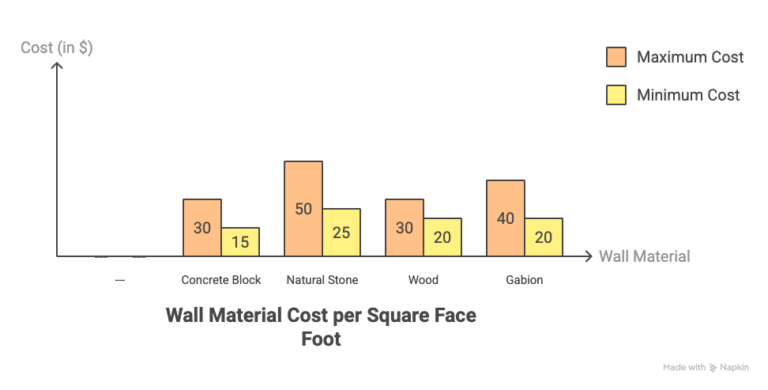
| Material | Cost per square face foot | Good to know |
|---|---|---|
| Concrete block (CMU or segmental) | $15 – $30 | The most common choice in San Diego. Strong, clean look, many finishes. |
| Wood / timber | $20 – $30 | Warm, natural look, but the shortest lifespan. Best for low garden walls. |
| Gabion (rock-filled wire baskets) | $20 – $40 | Drains well and suits modern or natural landscapes. |
| Natural stone | $25 – $50 | Premium look; labor-heavy to fit by hand. |
| Poured concrete | Quoted per project | Best for tall, engineered or curved walls and walls holding up a driveway. |
3. Engineering and permits
The City of San Diego requires a permit for retaining walls more than three feet above the footing, or for any wall supporting a load such as a driveway, slope or structure. Other cities set their own limits. For example, Carlsbad requires a permit for walls over 4 feet measured from the bottom of the footing. The City also notes that walls over 5 feet may need a grading permit (Information Bulletin 220).
- Engineered plans: $1,500 – $3,500
- Permit fees: $800 – $2,500
- Soils testing (when required): $500 – $1,500
We handle the plans and the permit for you, so you don’t have to deal with the city yourself.
4. Drainage
Most retaining wall failures come from water, not the wall itself. When soil behind a wall gets saturated, the pressure on it climbs fast. A proper drainage system is part of every wall we build.
- Gravel backfill: $40 – $60 per cubic yard
- French drain / perforated pipe: $25 – $50 per linear foot
- Weep holes and outlet pipes: $10 – $20 per linear foot
5. Site access and prep
- Excavation: $50 – $200 per cubic yard
- Tight access (no room for equipment, hand-carried materials): adds 15–30%
- Removing an old wall: priced by size and material
Sloped and Hillside Lots
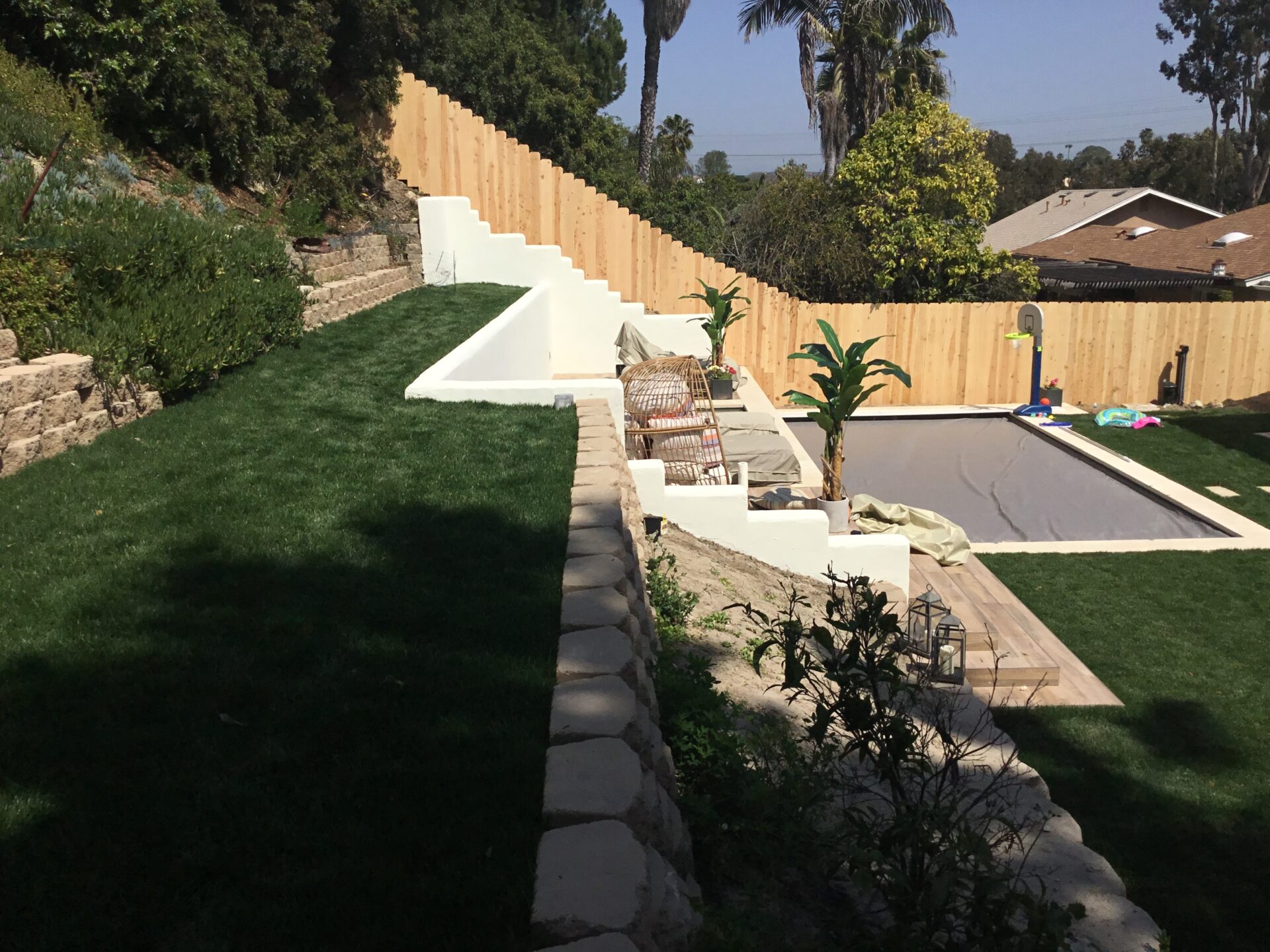
A lot of San Diego backyards sit on a slope, and that’s where retaining walls earn their keep. They turn an unusable hillside into flat space for a patio, lawn or play area, and they keep soil from sliding toward your house.
- Tiered walls: two or three shorter walls with planting beds between them can replace one tall wall. They’re often cheaper to engineer and easier on the eye. Cities have spacing rules for stacked walls, so they need to be planned, not improvised.
- Access: steep yards often mean smaller equipment or hand work, which adds labor.
- Soil and engineering: hillside walls are more likely to need a soils report and engineered plans.
Planning a full backyard on a slope? See our backyard remodel cost guide for patios, pavers and outdoor living costs.
Repair or Replace?
A repair is usually enough when you see:
- Small surface cracks that aren’t growing
- Clogged weep holes or a drain that needs clearing
- A few loose cap blocks
Plan on a replacement when you see:
- The wall leaning or bulging outward
- Large cracks that keep widening
- Soil or water pushing through the face
- Rotting timbers or a footing that has shifted
Not sure which you need? We’ll look at it in person and tell you honestly. Sometimes a drainage fix saves the whole wall.
Real San Diego Retaining Wall Projects
How to Save Without Cutting Corners
- Consider tiered walls: two shorter walls can cost less than one tall engineered wall.
- Pick block over stone: you can add a stone veneer or cap only where it shows.
- Bundle the work: doing the wall together with a patio, pavers or steps saves on mobilization and excavation.
- Never skip drainage: it’s the cheapest part of the wall and the most expensive to add later.
Paying for Your Wall
Most homeowners pay cash, use a home equity loan or HELOC, or take a personal loan. Rates change often, so check current rates with your bank or credit union before you decide.
Questions to Ask Your Retaining Wall Contractor
- Is your license active? (You can look it up on the CSLB website.)
- Will you handle the permit and engineered plans?
- What drainage will you install behind the wall?
- Can I see retaining walls you’ve built nearby?
- What warranty do you give on materials and workmanship?
Why Homeowners Choose Classic Home Contractors
- Licensed: California contractor license CSLB #1115508.
- No-surprise pricing: a clear, line-item proposal before work starts.
- Daily owner supervision: the owner is on your project, not just a crew.
- Guaranteed project timeline: you know when the work starts and finishes.
- Permits handled: we coordinate the engineering, plans and inspections.
See our retaining wall services or browse more hardscape work.
Retaining Wall Cost FAQ
How much does a retaining wall cost per foot in San Diego?
A concrete block wall runs about $55–$110 per linear foot at 2 feet tall and $70–$140 at 3 feet tall, including drainage. Taller walls that need engineering and permits cost more, often $115–$230 per linear foot at 6 feet before plans and permit fees.
Do I need a permit for a retaining wall in San Diego?
In the City of San Diego, yes if the wall is more than three feet above the footing, or if it supports a load such as a driveway, slope or structure. Other cities set their own limits; Carlsbad, for example, requires a permit over 4 feet measured from the bottom of the footing. We check the rules for your address and pull the permit for you.
What is the cheapest retaining wall material?
Concrete block and wood have the lowest cost per square face foot ($15–$30 and $20–$30). Block usually wins over time because it lasts much longer than wood.
How long does it take to build a retaining wall?
A short garden wall can often be built in a few days. Taller walls that need engineered plans and a permit take longer, since design and plan review come before construction.
Does every retaining wall need drainage?
Yes. Water pressure behind a wall is the most common reason walls lean, crack or fail. Gravel backfill, a perforated drain pipe and weep holes are part of every wall we build.
Get an Exact Price for Your Wall
Tell us about your yard and we'll give you a clear, line-item quote. No pressure, no surprises.